Accelerated CFI Training in 2026: Inside Our 4-Week Course
Published by
Julie Hadley
In This Article
You’ve flown a steep turn more times than you can count. Now picture standing at a whiteboard and explaining that steep turn out loud, to a room of other pilots, in a way a brand-new student would understand. That’s usually when commercial pilots discover that flying an airplane and teaching someone to fly it are two different skills.
Accelerated CFI training is built to close that gap fast. At SimpliFly Flight School, our Accelerated CFI Course runs four weeks, with two class sessions a day, Monday through Friday. It covers the Fundamentals of Instructing, the rest of the CFI material, and a full week of CFII work, and it’s designed to get you checkride ready for both certificates. Below is what each week holds, what to finish before day one, and what the month costs, so you can decide whether this format fits you.
What Four Weeks of Accelerated CFI Training Actually Covers
The course follows a fixed weekly map, so you always know what’s next. Here’s how the month breaks down, with a link to the full course details.
| Week | Focus | Program |
|---|---|---|
| Week 1 | Fundamentals of Instructing (FOIs) | Accelerated CFI Course |
| Weeks 2 and 3 | The rest of the CFI material | Certified Flight Instructor |
| Week 4 | Instrument instructor material | CFII |
Across those four weeks you get over 80 hours of ground lessons, 15 hours of flight time in our Cessna 172s, 5 hours in the Redbird simulator, and spin training. The training for both instructor certificates fits inside one month of scheduled sessions.
Why the First Week Belongs to the Fundamentals of Instructing
The Fundamentals of Instructing, usually called the FOIs, are the teaching half of becoming a CFI. They cover how people learn, how to plan a lesson, how to assess a student, and how to communicate when someone is confused or nervous. The FAA tests this knowledge separately, which tells you how much weight it carries.
Anyone who has spent years in a classroom will tell you that teaching gets better with practice. Week one gives you that practice before you start building your own lessons. You learn the structure first, then you apply it to every maneuver and topic in weeks two and three.
Putting the FOIs first also changes how the rest of the month feels. By the time you reach stalls and ground reference maneuvers, you already have a framework for explaining them. You can see more about the path from commercial pilot to instructor on our Certified Flight Instructor program page.
What a Two-Session Day Asks of You
Two sessions a day, five days a week, is a full-time commitment. Plan your month the way you’d plan a new job. Most of your day goes to ground lessons, lesson-plan building, and practice teaching, with flights and simulator sessions mixed in through the month.
The flying feels different, too. You’ll fly from the right seat of our 172s, the seat you’ll sit in as an instructor, and practice talking through a maneuver while you fly it. Explaining a power-off stall as it happens takes rehearsal, and the 15 hours of flight time give you room for that rehearsal.
Spin training is in the course because the FAA requires an endorsement showing you’re competent in stall awareness, spin entry, spins, and spin recovery before you can earn an airplane CFI certificate. You’ll train for that endorsement during the month, so it’s ready when your checkride comes.
Pilots who do well in an accelerated format tend to review the day’s material every night and polish the next lesson plan before they sleep. You’ll be working alongside pilots at the same stage of their careers, which makes those evenings easier, and you can read how other instructors made this jump in why becoming a CFI is the bridge to 1,500 hours.

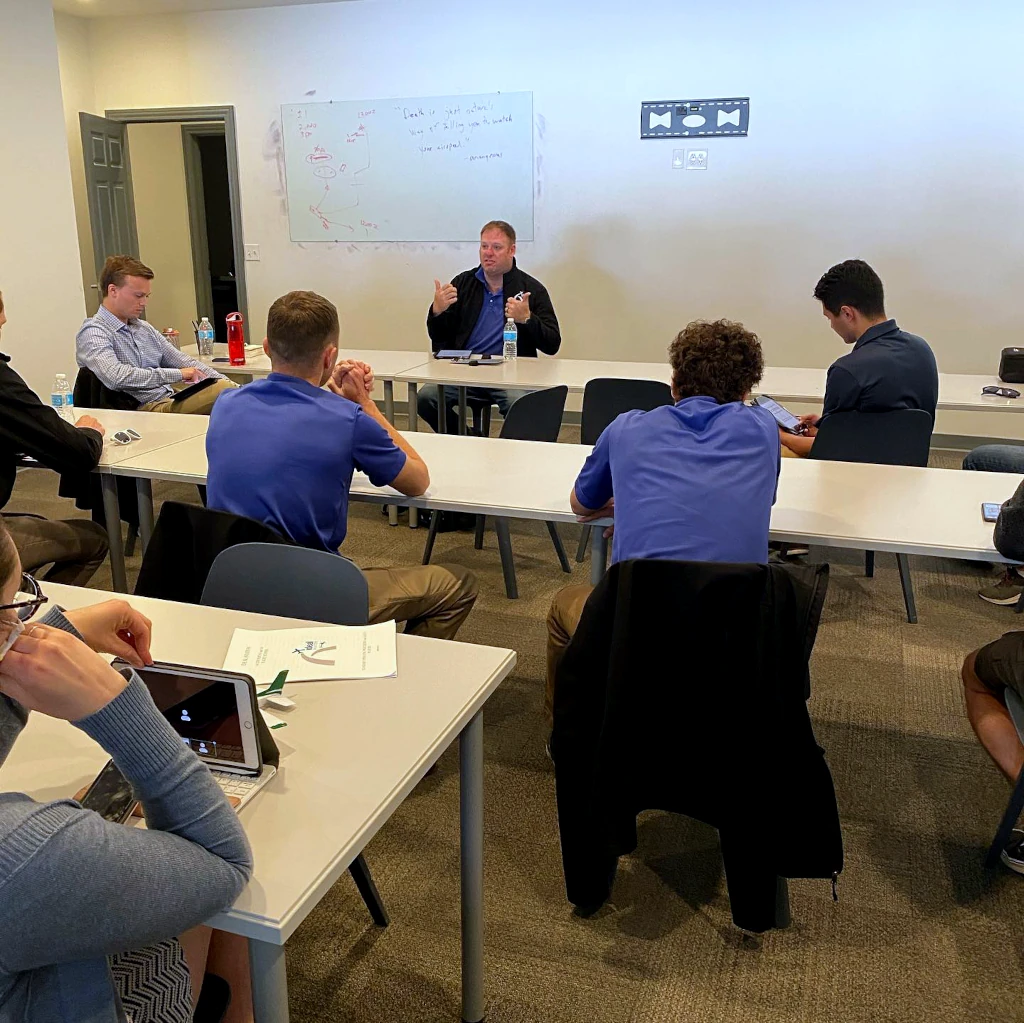
Practicing how to talk a student through a maneuver while you fly it.
What CFII Week Adds to Your Certificate
Week four turns to instrument instruction. The CFII lets you teach instrument students, which widens the kind of training you can give once you’re instructing. The work covers ATC clearances and procedures, flight by reference to instruments, navigation aids, instrument approach procedures, and emergency operations, all from a teaching point of view.
The Redbird simulator carries much of week four. You can set up an approach, pause it, and walk through what a student should see and do at each step, without fuel burn or weather in the way. It’s the same kind of training your future instrument students will get in our Instrument Rating program.
Finishing CFII in the same month as your CFI keeps the material fresh and connected. You’re teaching instrument concepts while your instructing habits are still brand new, instead of returning to it months later.
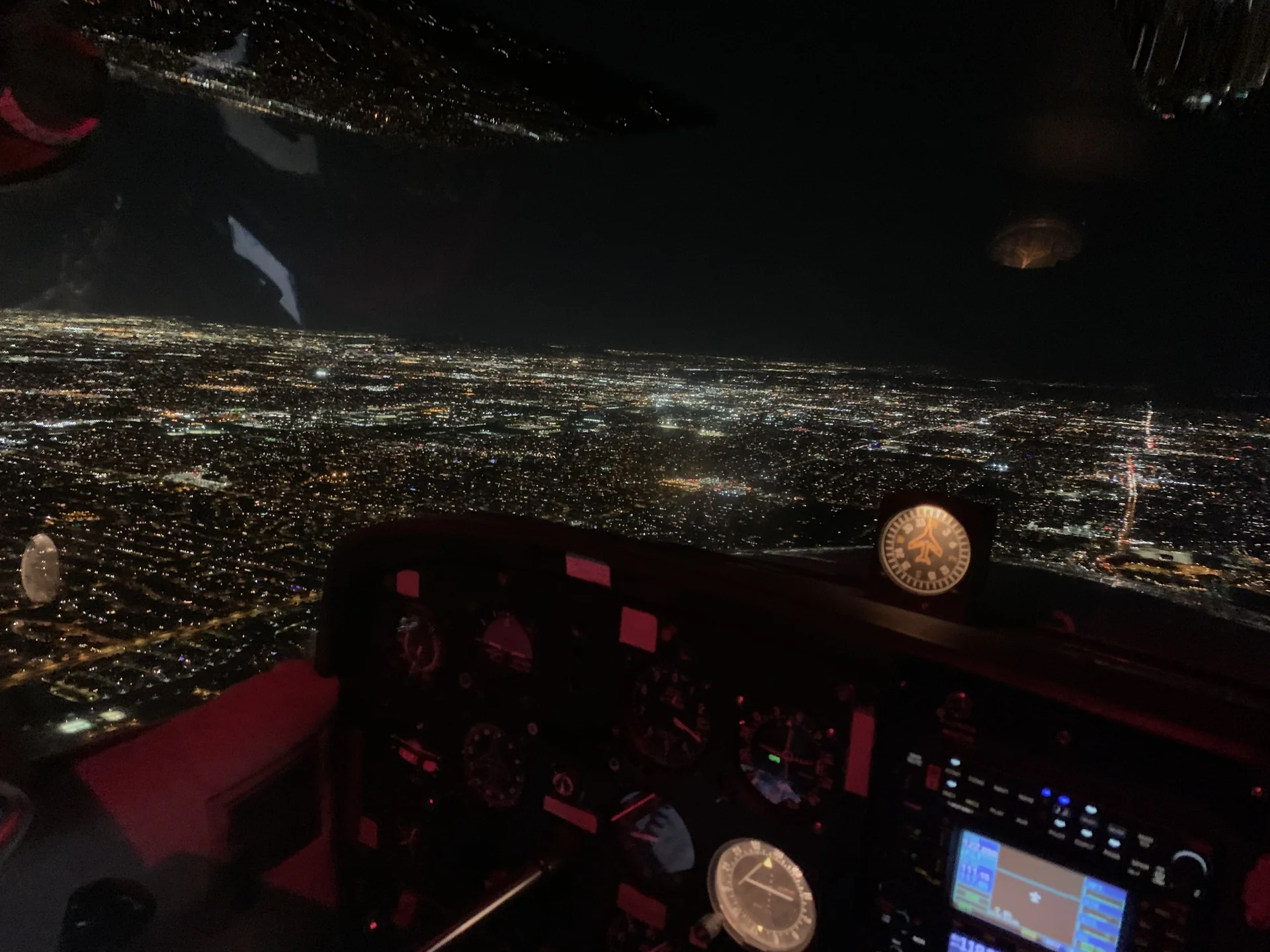
Week four turns your focus to teaching instrument flying.
Check These Boxes Before Day One
A month moves quickly, so arrive with your eligibility in order. Under the FAA’s flight instructor rules, you need to:
- Be at least 18 years old and able to read, speak, write, and understand English.
- Hold a commercial pilot certificate (or an ATP) with the right category and class. Our Commercial Pilot program covers that step.
- Hold an instrument rating, which is required for an airplane CFI and for the CFII.
- Have at least 15 hours as pilot in command in the category and class you’ll instruct in.
- Pass the knowledge tests: the FOI test (unless you’re exempt, for example because you already hold a flight or ground instructor certificate), the flight instructor airplane test, and the instrument instructor test.
Plan your knowledge tests early. Many pilots take them before day one so the month stays focused on teaching and flying. Call us at 480-256-8355 and we’ll help you plan the timing around your start date.
Who the Accelerated Format Suits, and Who Should Go Flexible
The accelerated course fits pilots who can clear a full month and want both certificates in one push. If you’re coming straight off your commercial checkride, your flying is sharp and your study habits are already in gear, which makes this a natural moment to start.
It’s a harder fit if you’re working full time or can’t step away for four straight weeks. That’s why we also offer flexible CFI training, which spreads the same material over a longer stretch around your schedule. You can compare both options on our CFI program page.
If you can treat the next month like a full-time teaching job, choose accelerated. If you’d be squeezing sessions between shifts, flexible training will likely serve you better, and you’ll keep more of what you learn.
What You Leave With, and What Comes After the Course
The course is built so you finish with all of your lesson plans complete and, once your instructor signs you off as ready, endorsements for both your CFI and CFII checkrides. Those lesson plans are the toolkit you’ll teach from in your first months as an instructor.
The checkrides come next, and they’re given by an examiner. Examiner calendars vary, so plan on four to eight weeks from day one of the course to holding both certificates. We’ll help you line up your checkride dates as the month wraps up.
Once you’re certificated, the instructing starts paying you back. Instructing is how most professional pilots build the hours toward airline minimums, and you can read more about that path in our guide to R-ATP and ATP certification. If you completed your private, instrument, commercial, and CFI training here, you’re guaranteed an interview for a CFI position with us, as explained on our instruct at SimpliFly page.
Zach F. earned a CFI with us and wrote that our instructors “helped me feel confident in my teaching.” Building that confidence in front of a student is what the month is for.

Checkride day is the payoff for a focused month of preparation.
Budgeting for the Course and Your Checkrides
Course tuition is $8,900. That covers the four weeks of ground lessons, flight time, simulator time, and spin training described above. Examiner fees are their own line in your budget.
| Cost item | Planning figure | Where to plan it |
|---|---|---|
| Accelerated CFI Course tuition | $8,900 | Paid to SimpliFly |
| CFI initial checkride | About $2,500, depending on the examiner | Training cost estimator |
| CFII checkride | About $1,500, depending on the examiner | Training cost estimator |
If you need help paying for training, financing is available through our partners. We don’t lend directly, but we work with Stratus Financial, Flight Training Finance, and AOPA Finance, and you can compare them on our financing page.
Frequently Asked Questions About Accelerated CFI Training
Do I need a commercial certificate before the course?
Yes. You need a commercial pilot certificate (or an ATP) and an instrument rating before you can earn an airplane CFI. See our Commercial Pilot program if you’re still working on it.
How long is the accelerated CFI course?
It’s four weeks, two sessions a day, Monday through Friday. With checkride scheduling, most pilots should plan on four to eight weeks to hold both certificates.
Does the course include CFII?
Yes. Week four is dedicated to CFII, and the course is designed to get you endorsed for both checkrides.
What does it cost?
Course tuition is $8,900. Plan separately for examiner fees, and use our training cost estimator to map the rest.
Can I work during the course?
It’s a full-time schedule, so most pilots clear the month. If you can’t, our flexible CFI training may fit better.
When does the next session start?
Sessions fill, so call us at 480-256-8355 or contact us for the next start date.
Reserve Your Spot in the Next Accelerated CFI Session
If you have your commercial certificate and instrument rating, and you can give this a focused month, the next step is enrolling. You’ll spend four weeks learning to teach, finish your lesson plans, and leave ready for two checkrides. Enroll in the Accelerated CFI Course and we’ll reach out to confirm your start date and plan your knowledge tests with you.


