Part 61 Private Pilot Training at Falcon Field: 2026 Stages
Published by
SimpliFly Flight School
In This Article
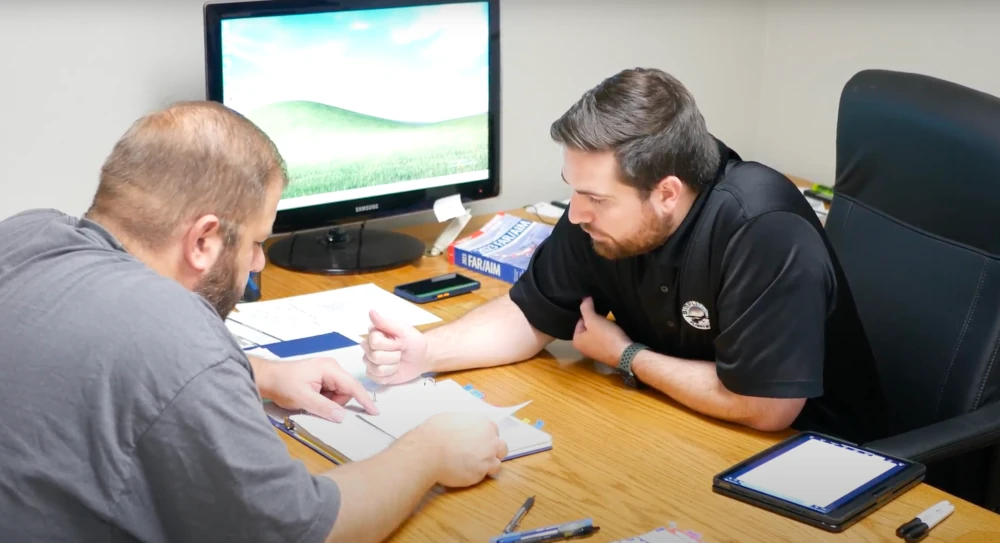
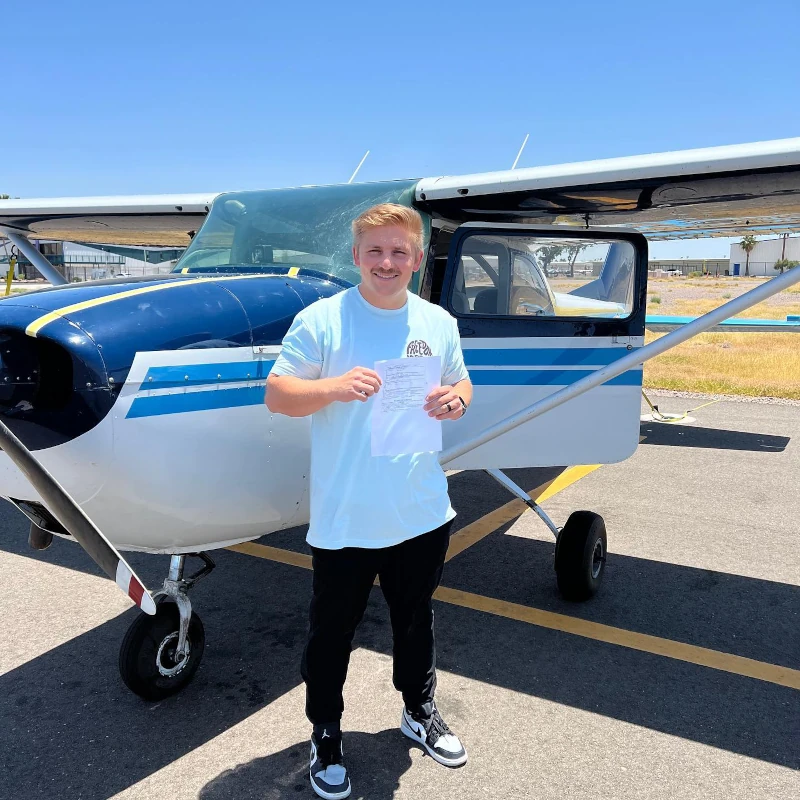
There’s a moment in private pilot training when your instructor slides a few sheets of paper across the table. It’s a written quiz on the regulations, Falcon Field’s airspace, and the airplane you’ve been flying. When you see it, your first solo is close, and the lessons that led there start to make sense as a sequence.
That quiz is one of several checkpoints in Part 61 private pilot training. Part 61 is the section of the federal rules that lists what a private pilot applicant has to learn and log. Most students move through six stages: first lessons and maneuvers, pattern work and landings, the pre-solo test and first solo, cross-country flying, night and instrument time, and checkride prep. Below is what each stage looks like here at Falcon Field, and what the FAA requires before you move on.
Why Part 61 Lets Your Instructor Set the Order
We train under Part 61. The rules spell out the maneuvers you must be trained in, the hours you must log, and the endorsements you need. They don’t fix a single lesson order, so your instructor can spend another flight on landings when you need it or move ahead when you’re ready.
If you want the comparison with Part 141, our post on why we chose Part 61 covers it. The rest of this guide sticks to what your weeks actually look like in our Private Pilot program, which you can start with no flying experience at all.
Stage 1: Your First Lessons Teach the Airplane
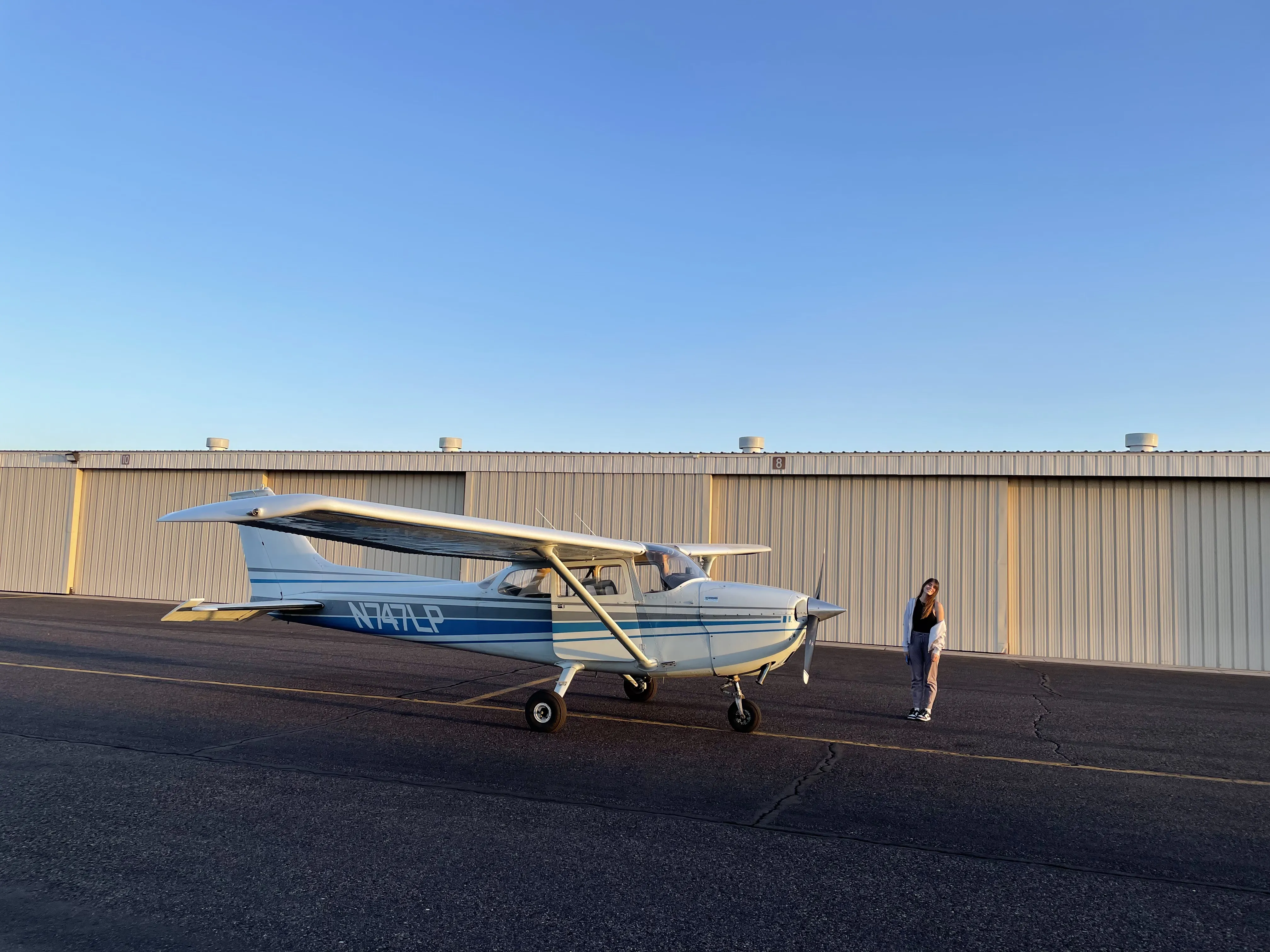
The first stage is about learning how the airplane responds to you. Most students start in a Cessna 172, and if you took a discovery flight with us, you’ve already flown most of an hour with an instructor beside you.
Each lesson starts on the ground. You plan the flight, walk around the airplane, check the fuel and oil, then taxi and run up the engine before takeoff. In the air, you work on the basics the FAA lists for every student before solo:
- Straight-and-level flight and turns in both directions
- Climbs, climbing turns, and descents, with and without flaps
- Flight at different airspeeds, from cruise down to slow flight
- Stalls and stall recovery, including recovery from a full stall
- Ground reference maneuvers, where you fly a precise path over the ground while the wind pushes you off it
These first flights also teach collision avoidance and scanning, because the East Valley sky is busy. Expect your instructor to fold ground topics into every lesson, so the airplane systems and the rules make sense while you’re using them.
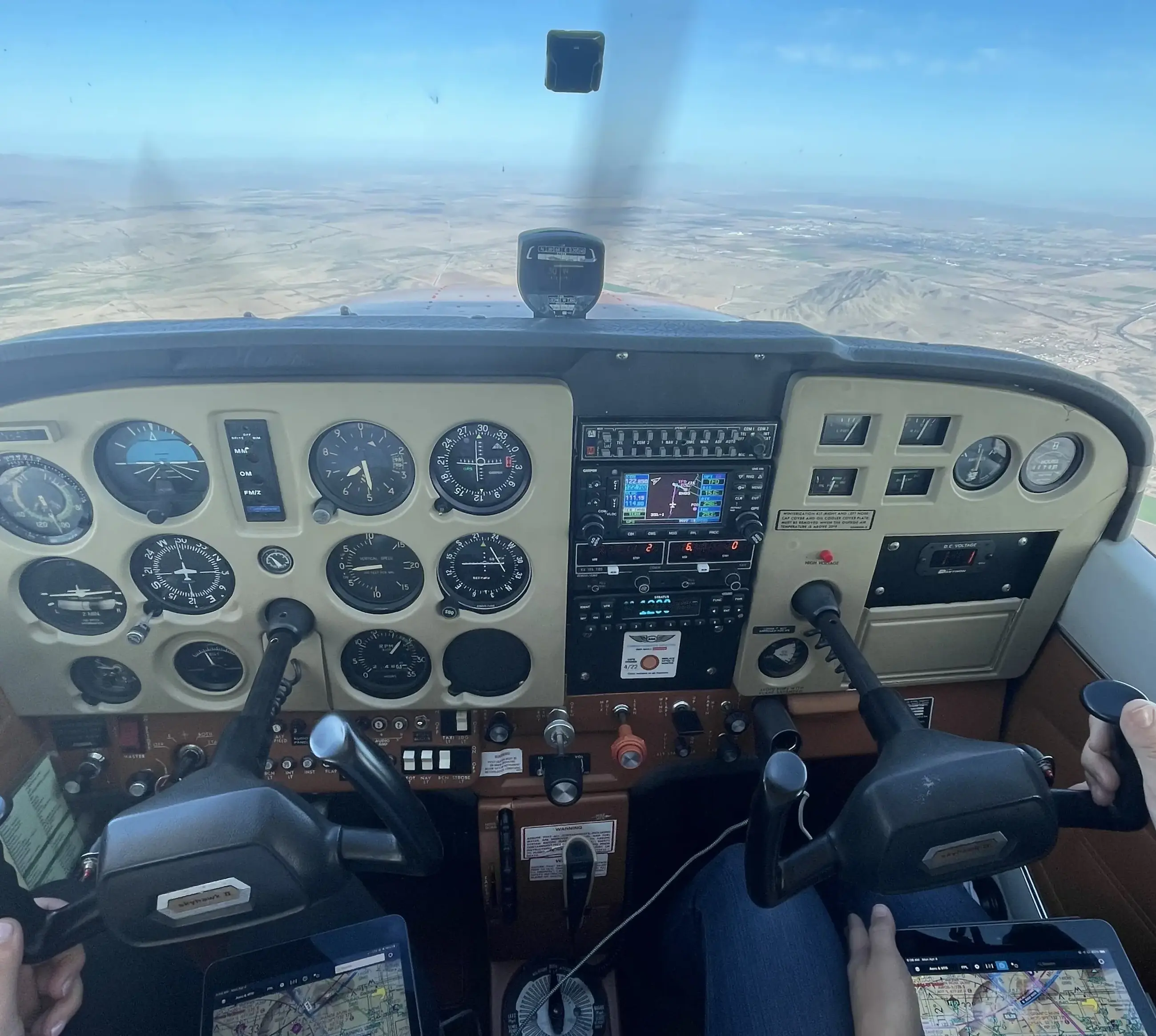
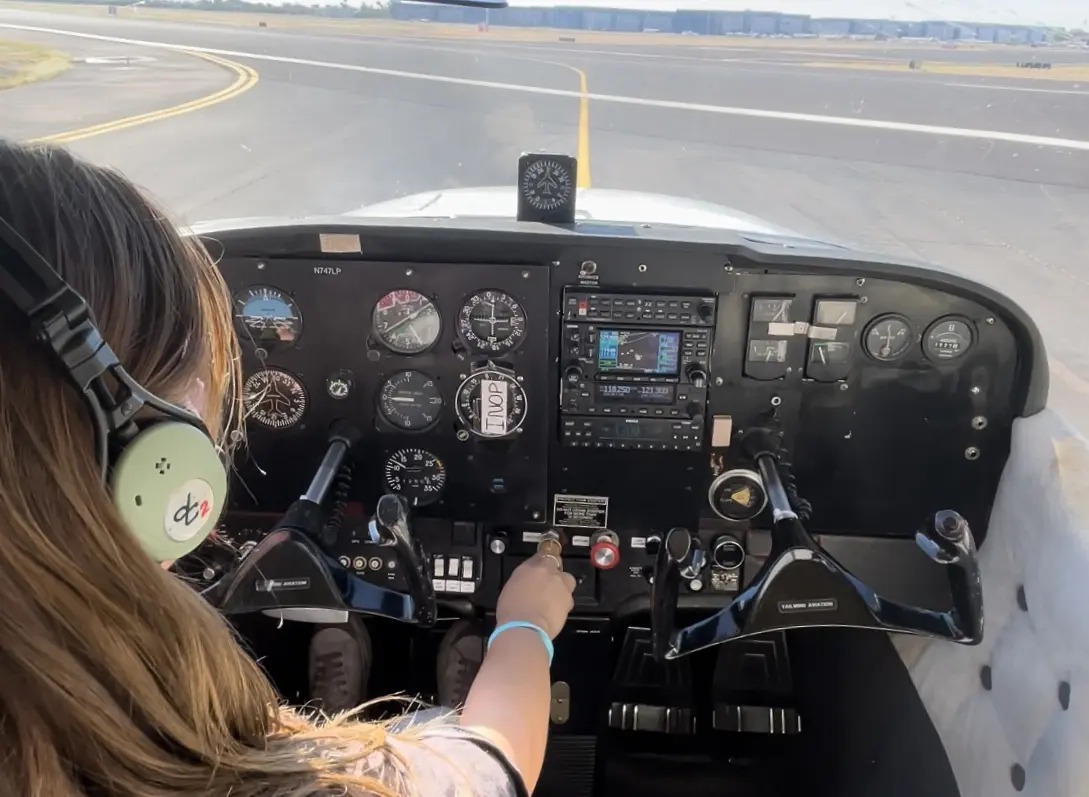
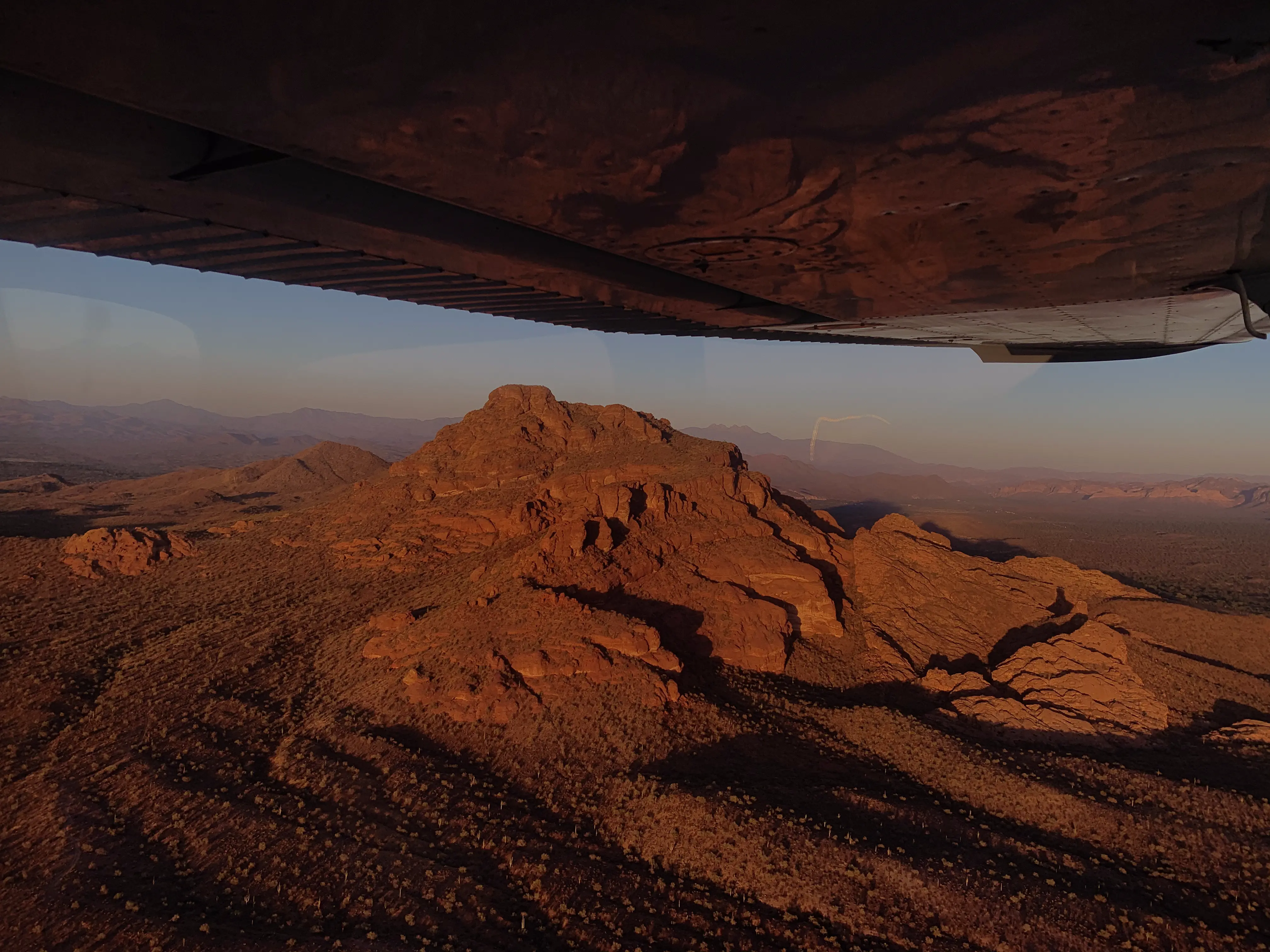
Early lessons teach the panel and the view outside together.
Stage 2: Pattern Work Is Where Landings Get Built
Once the airplane feels familiar, the lessons move to the traffic pattern, the rectangular path pilots fly around a runway to take off and land. This stage can feel repetitive, and that’s on purpose. Every lap is a full takeoff, approach, and landing, and you might fly several in one lesson.
Falcon Field is a towered airport with two parallel runways, so you talk to air traffic control from the first lesson. You listen to ATIS, the recorded weather and runway information, call Falcon Ground for taxi, read back your instructions, then switch to Falcon Tower for takeoff. Our guide to radio communication at Falcon Field walks through those calls word by word.
In the pattern, you practice normal and crosswind takeoffs and landings, go-arounds, slips to a landing, and approaches with a simulated engine failure. That last one is the moment your instructor pulls the power back and asks where you’d land. After enough repetitions, picking a landing spot becomes a calm, practiced decision.
Stage 3: The Pre-Solo Test and Your First Solo
Before your first solo, the FAA requires two things from your instructor. First, the written pre-solo test from the opening of this post. Your instructor gives it, not the FAA, and it covers the parts of the rules that apply to you, the airspace rules and procedures at the airport where you’ll solo, and the limits of the airplane you’ll fly. Then your instructor goes over every answer you missed before signing anything.
Second, your instructor must be satisfied that you can fly every pre-solo maneuver safely and consistently. When you can, you get a logbook endorsement for that make and model of airplane. It has to come from an instructor who trained you within the 90 days before the flight.
You’ll also need a student pilot certificate and an FAA medical before solo, and you must be at least 16. Our private pilot license requirements checklist explains when to start each one so paperwork never holds up this stage.
On the day itself, your instructor steps out, the right seat is empty, and you hear Falcon Tower clear you for takeoff. The FAA also requires three solo takeoffs and full-stop landings at an airport with an operating control tower. Because Falcon Field has a tower, those happen at home.
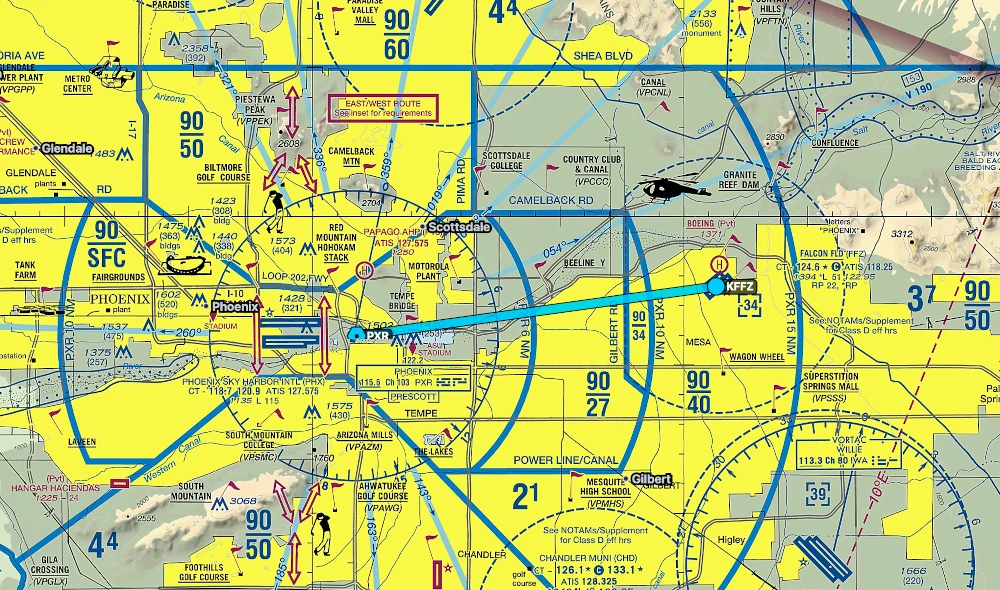
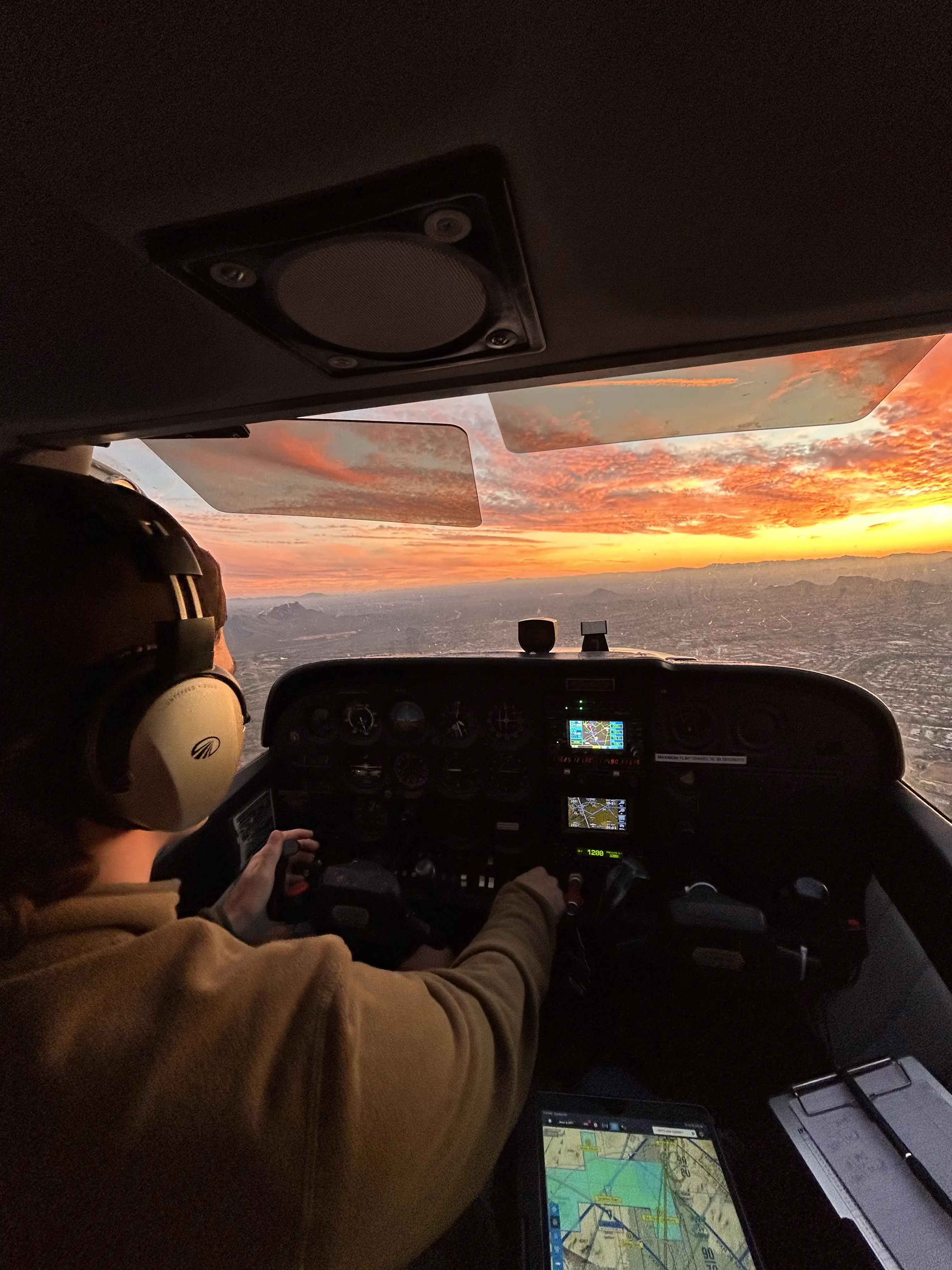
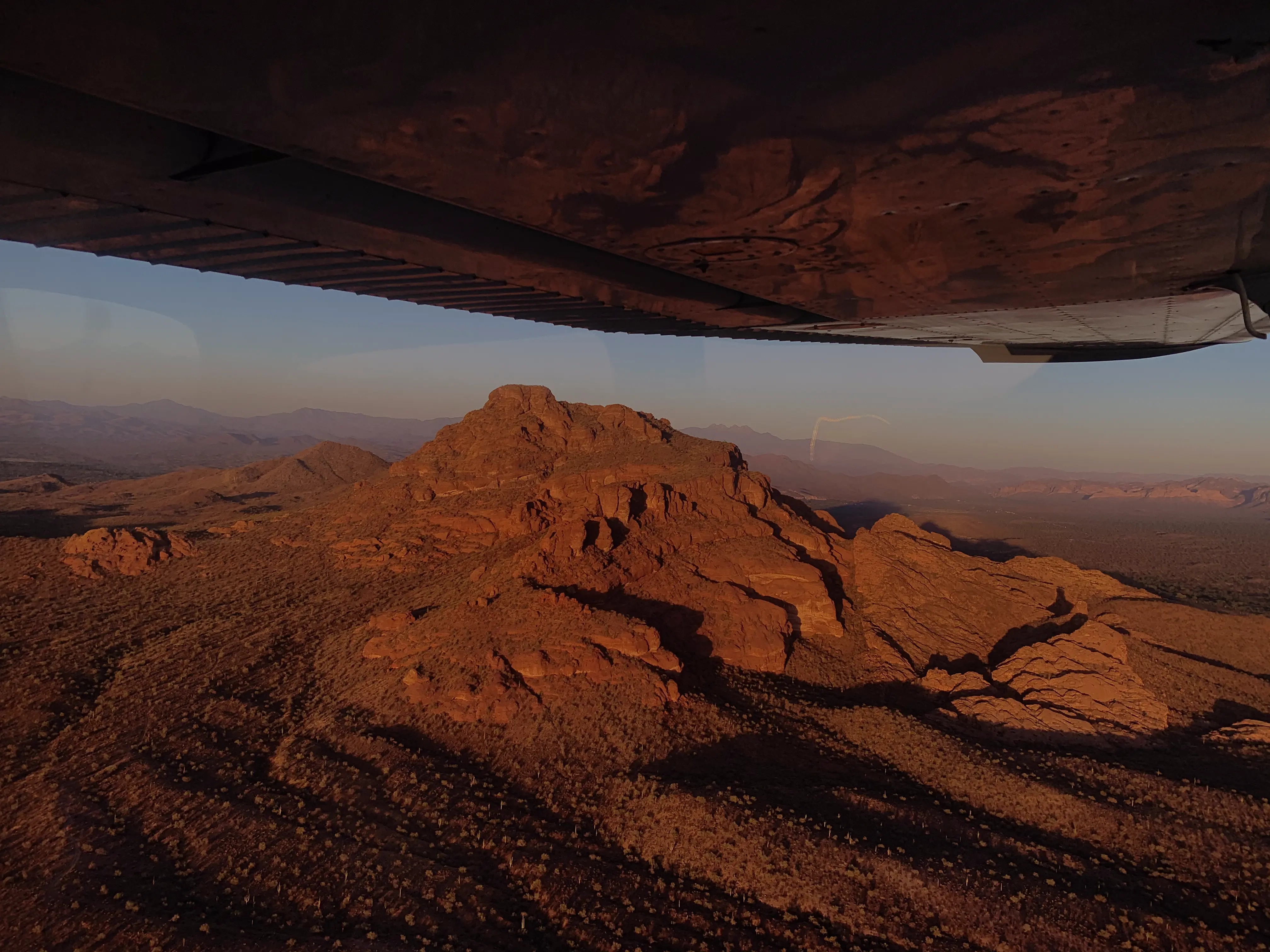
Cross-country planning from Mesa starts with the airspace around Phoenix Sky Harbor.
Stage 4: Cross-Country Flying Takes You Beyond the Pattern
Cross-country training is where you learn to go somewhere. Under the rules, a solo flight counts as a cross-country when you go more than 25 nautical miles from your departure airport or land somewhere else.
First you fly with your instructor. The FAA requires at least 3 hours of dual cross-country training, and before you go alone you train in:
- Pilotage and dead reckoning, navigating with a chart, a compass, landmarks, and your own math
- Performance charts and weather reports and forecasts
- Short-field, soft-field, and crosswind takeoffs and landings
- Best angle and best rate climbs, emergency procedures, and radio navigation
From Mesa, your planning starts with the airspace around Phoenix Sky Harbor, which shapes how you route out of the Valley. Your VOR tracking skills and your chart work come together on these flights.
Every solo cross-country gets its own logbook endorsement. Before each one, your instructor reviews your planning and the weather and confirms you’re ready for the flight under the known conditions. You’ll log at least 5 hours of solo cross-country, including one long flight of 150 nautical miles total with full-stop landings at three airports and one leg longer than 50 nautical miles.
Stage 5: Night and Instrument Time Round Out Your Logbook
Two shorter requirements usually fit around the cross-country stage. The first is 3 hours of night training, which includes one cross-country flight of more than 100 nautical miles total and 10 takeoffs and full-stop landings. Flying over the lights of the Valley at night is one of the best views in training.
The second is 3 hours of flight training by reference to instruments. You wear a view-limiting device so you can only see the panel, and you practice keeping the airplane under control without looking outside. This is a safety skill: if you ever fly into a cloud by mistake, it’s what gets you back out. Our Redbird simulator is useful practice for that scan on days the weather or schedule won’t cooperate.
Arizona weather keeps most of this stage moving all year. In the summer, lessons shift toward the cooler hours, which our post on how heat shapes Phoenix training explains.
Stage 6: The Knowledge Test and Checkride Prep Close It Out
Somewhere in stages 4 and 5, most students take the FAA knowledge test, the computer-based written exam. You need an instructor endorsement to take it, and you must pass it within the 24 calendar months before your checkride. Our post on the written exam explains what it covers.
The last required block is 3 hours of checkride preparation with your instructor, completed within the two calendar months before the test. Your instructor then endorses you, and an FAA examiner gives the checkride, an oral exam plus a flight. How to get ready for that day is a big enough topic that we’re giving checkride prep its own post.
Your Stages and the FAA Minimums at a Glance
Forty hours is the FAA minimum. Most students log more before their instructor signs them off, so read the hours below as the floor.
| Stage | What you do | What the FAA requires before you move on |
|---|---|---|
| 1. First lessons in the Private Pilot program | Preflight, basic maneuvers, slow flight, stalls | Training logged in each pre-solo maneuver |
| 2. Pattern work | Takeoffs, landings, go-arounds, engine-out approaches | Safe, consistent landings |
| 3. First solo | Pre-solo test, solo in the pattern | Pre-solo test, endorsement within 90 days, student certificate, medical |
| 4. Cross-country | 3 hours dual, 5 hours solo, one 150 nm trip | Per-flight solo cross-country endorsement |
| 5. Night and instruments | 3 hours night, 3 hours instrument training | Logged hours |
| 6. Checkride prep | Knowledge test, 3 hours of prep | Instructor endorsement, examiner checkride |
Across all six, you’ll log at least 40 hours total, with 20 hours of instruction and 10 hours solo.
What Keeps You Moving From One Stage to the Next
Consistency is what keeps a stage from repeating itself. We ask our students to fly three to four times a week. Skills you practice once a week fade between lessons, and the next flight starts with review instead of progress.
At that pace, most of our students finish the private in three to six months. Your timeline depends on weather, aircraft and instructor availability, and how often you fly, and we’ll map it with you. Our guide to avoiding common training pitfalls covers the habits that keep students on pace.
For cost, plan on a budget of $18,000 to $20,000 for the private certificate. Our training cost estimator breaks it down line by line. We don’t lend directly, but we work with Stratus Financial, Flight Training Finance, and AOPA Finance, and our financing page explains each option.
FAQ
Do I need experience before I start Part 61 private pilot training?
No. Our Private Pilot program starts from zero, and many students begin with a discovery flight.
When will I solo?
When you’ve trained in every pre-solo maneuver, passed your instructor’s pre-solo test, and hold a student pilot certificate and medical. The timing depends on how often you fly.
Is the pre-solo test the same as the FAA knowledge test?
No. Your instructor gives the pre-solo test before your first solo. The FAA knowledge test comes later and must be passed before your checkride.
Can I fly my solo cross-country whenever I want?
Each solo cross-country needs a logbook endorsement from your instructor after a review of your planning and the weather.
How long does private pilot training take at SimpliFly?
Most of our students finish in three to six months, flying three to four times a week.
How much does a private pilot license in Arizona cost?
Plan on $18,000 to $20,000. Our private pilot license cost guide explains what drives the number.
Start Stage 1 With a Discovery Flight
The fastest way to see what stage one feels like is to fly it. On a discovery flight, you take the controls of one of our airplanes with an instructor beside you, talk through the training path, and see Falcon Field from the left seat. Book your discovery flight and we’ll show you where your first lesson starts.